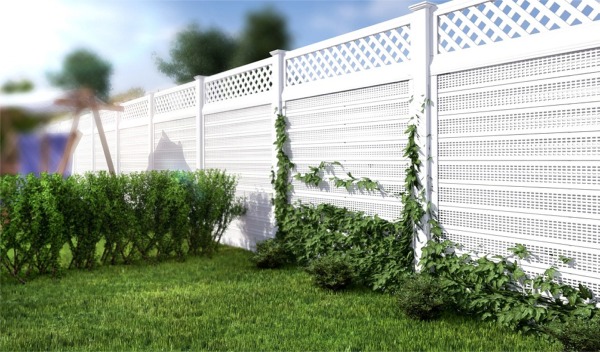
Ploty Winylowe na plot i furtę sztachetowa jako substrat architektury przypadkiem może uskutecznić parę podstawowych powinności.
Sztachetki plastikowe na plot i bramę ze sztachetek jako cząstka architektury może zrealizować nieco istotnych funkcji.</h1> <p align="justify">Istotną funkcją dowolnego ogrodzenia jest zabezpieczenie. Ogrodzenia powinny chronić posesję przede wszystkim przed łupieżcami. Aczkolwiek ogrodzenia strzegą także przed zwierzętami jakie mogłyby unicestwić np. rośliny zasadzone w ogrodzie.ogrodzenie Winylowe na ogrodzenie i bramkę sztachetowa mogą istnieć także znamienitą asekuracją od wiatru tudzież kurzu. Dzięki ekranowi który można zmajstrować z ogrodzenia wypoczynek w skwerze stanie się prawdziwą rozkoszą. By ogrodzenie piastowało taką funkcje powinno być zrobione z kasetonów tak żeby dowolne przęsło było kompletnego. Plot z plastyku na plot i bramkę ze sztachetek jest wyśmienitą asekuracja przed namolnymi sąsiadami. Stawiając wysokie płot, a najodpowiedniej szczelnie zabudowane nikt nie wpadnie na naszą posesje. Płot jest swojego typu wartownikiem naszej intymności.</p> <img style='float:righ;margin:10px;' src="http://sztachety.plastikowe.info.pl/wp-content/uploads/2011/08/athy2-077.jpg" title="Dystrybutor Dzisiejszych Ogrodzeń Plastykowych z Szczawna-Zdrój"/> <h2>Izolacja dźwiękowa ogrodzenie PVC na plot i furtkę ogrodzeniowa to kolejna funkcja .</h2> <p align="justify">Zwłaszcza od strony ruchliwej szosy winniśmy mieć ogrodzenia dźwiękoszczelne. Wskutek takiemu ogrodzeniu na polskiej posiadłości będzie o co niemiara ciszej. Zupełną samotnością akustyczną dowodzą się sztachetki plastikowe na ogrodzenie i furtkę ze sztachetek. Wyjąwszy to płot ma być nie tylko funkcjonalne. Zasadniczą rolą płotu jest ozdoba dowolnej nieruchomości. Płot jest bonusem do budynku, więc aparycja oraz postać płotu ma obowiązek stanowi zharmonizowany do wzoru w którym wybudowano budynek. Lecz już sam wybór idealnego ogrodzenia nie wystarczy. Ogrodzenie winno być porządne albowiem bez tego chociażby najpiękniejsze ogrodzenie w dniu zakupu z upływem czasu utraci na własnej naturze. Jednym słowem plot z plastyku na ogrodzenie i bramkę ze sztachetek ma zdobić a nie szpecić ogrodzenie. Powyższe argumenty certyfikują że ogrodzenie może spełniać sporo powinności, chociaż bazowym poleceniem płotu jest ochrona. Jednakże pozostałe funkcje są równie ważne. Funkcjonalność ogrodzenia uzależniona jest przede wszystkim od materiałów z jakich jest utworzone, jego designu (ażurowe bądź pełne), jak wysokie jest ogrodzenie) i położenia w którym je zainstalujemy.</p> <img style='float:left;margin:10px;' src="http://ogrodzenia.pcv.org.pl/wp-content/uploads/2011/10/fence171.jpg" title="Ogrodzenia Plastikowe z Bielawa"/>
<div style='clear: both;'></div>
</div>
<div class='post-footer'>
<div class='post-footer-line post-footer-line-1'>
<span class='post-author vcard'>
Автор:
<span class='fn' itemprop='author' itemscope='itemscope' itemtype='http://schema.org/Person'>
<meta content='https://www.blogger.com/profile/10013749640854242804' itemprop='url'/>
<a class='g-profile' href='https://www.blogger.com/profile/10013749640854242804' rel='author' title='author profile'>
<span itemprop='name'>2016flesh</span>
</a>
</span>
</span>
<span class='post-timestamp'>
на
<meta content='http://stuartsays.blogspot.com/2016/05/balaski-plastikowe-na-ogrodzenie-i.html' itemprop='url'/>
<a class='timestamp-link' href='http://stuartsays.blogspot.com/2016/05/balaski-plastikowe-na-ogrodzenie-i.html' rel='bookmark' title='permanent link'><abbr class='published' itemprop='datePublished' title='2016-05-25T06:05:00-07:00'>06:05</abbr></a>
</span>
<span class='post-comment-link'>
<a class='comment-link' href='http://stuartsays.blogspot.com/2016/05/balaski-plastikowe-na-ogrodzenie-i.html#comment-form' onclick=''>
Комментариев нет:
</a>
</span>
<span class='post-icons'>
<span class='item-control blog-admin pid-41466043'>
<a href='https://www.blogger.com/post-edit.g?blogID=1212400421505848284&postID=3327700733638923681&from=pencil' title='Изменить сообщение'>
<img alt='' class='icon-action' height='18' src='https://resources.blogblog.com/img/icon18_edit_allbkg.gif' width='18'/>
</a>
</span>
</span>
<div class='post-share-buttons goog-inline-block'>
<a class='goog-inline-block share-button sb-email' href='https://www.blogger.com/share-post/1212400421505848284/3327700733638923681?https=true&target=email' target='_blank' title='Отправить по электронной почте'><span class='share-button-link-text'>Отправить по электронной почте</span></a><a class='goog-inline-block share-button sb-blog' href='https://www.blogger.com/share-post/1212400421505848284/3327700733638923681?https=true&target=blog' onclick='window.open(this.href, "_blank", "height=270,width=475"); return false;' target='_blank' title='Написать об этом в блоге'><span class='share-button-link-text'>Написать об этом в блоге</span></a><a class='goog-inline-block share-button sb-twitter' href='https://www.blogger.com/share-post/1212400421505848284/3327700733638923681?https=true&target=twitter' target='_blank' title='Поделиться в X'><span class='share-button-link-text'>Поделиться в X</span></a><a class='goog-inline-block share-button sb-facebook' href='https://www.blogger.com/share-post/1212400421505848284/3327700733638923681?https=true&target=facebook' onclick='window.open(this.href, "_blank", "height=430,width=640"); return false;' target='_blank' title='Опубликовать в Facebook'><span class='share-button-link-text'>Опубликовать в Facebook</span></a><a class='goog-inline-block share-button sb-pinterest' href='https://www.blogger.com/share-post/1212400421505848284/3327700733638923681?https=true&target=pinterest' target='_blank' title='Поделиться в Pinterest'><span class='share-button-link-text'>Поделиться в Pinterest</span></a>
</div>
</div>
<div class='post-footer-line post-footer-line-2'>
<span class='post-labels'>
</span>
</div>
<div class='post-footer-line post-footer-line-3'>
<span class='post-location'>
</span>
</div>
</div>
</div>
</div>
</div></div>
<div class="date-outer">
<h2 class='date-header'><span>вторник, 24 мая 2016 г.</span></h2>
<div class="date-posts">
<div class='post-outer'>
<div class='post hentry uncustomized-post-template' itemprop='blogPost' itemscope='itemscope' itemtype='http://schema.org/BlogPosting'>
<meta content='http://sztachety.plastikowe.info.pl/wp-content/uploads/2011/07/deck2_05_08.jpg' itemprop='image_url'/>
<meta content='1212400421505848284' itemprop='blogId'/>
<meta content='7897597591602033423' itemprop='postId'/>
<a name='7897597591602033423'></a>
<h3 class='post-title entry-title' itemprop='name'>
<a href='http://stuartsays.blogspot.com/2016/05/trwae-poty-drewniane.html'>Trwałe płoty drewniane</a>
</h3>
<div class='post-header'>
<div class='post-header-line-1'></div>
</div>
<div class='post-body entry-content' id='post-body-7897597591602033423' itemprop='description articleBody'>
<h2>Długowieczne ogrodzenia z drewna</h2> <p align="justify">Nietrafnie konserwowane płoty z drewna szybko się psują i mogą nieodwracalnie zgubić swój pierwotny wdzięk i właściwości. Decydując się na zastosowanie drewna na ogrodzenie wskazane jest poznać typy pielęgnacji oraz konserwacji takiego ogrodzenia. Tylko wtedy zdołamy upajać się jego pięknem przez długie lata.</p> <img src="http://sztachety.plastikowe.info.pl/wp-content/uploads/2011/07/deck2_05_08.jpg" style="float:left;margin:10px;" title="Producent"/> <p align="justify">Wszelakie prace konserwujące płot z drewna należy rozpocząć od poprawnego oraz starannego przygotowania materiału na ogrodzenie, albowiem od tego uzależniony jest rezultat finalny własnych prac. Przed użyciem artykułów do osłony i ozdoby sztachet z drzewa kluczowe jest oszacowanie, czy drewno jest czyste, suche i czy nie dźwiga objawów biokorozji. Wówczas po zwieńczeniu obróbki drewna na płot zdołamy przejść do aplikacji preparatów konserwujących.</p> <p align="justify">Pielęgnację, zwłaszcza w przypadku ascetycznego drewna ogrodzeniowego, powinniśmy zacząć od naniesienia 1-2 warstw achromatycznego impregnatu technicznego, który zabezpiecza drewno ogrodzeniowe przed grzybami, sinizną i robakami. Kiedy ochronimy już nasze ogrodzenie przed postępem biokorozji, należy nanosić następne amalgamaty, jakie konserwują je przed warunkami atmosferycznymi- wodą i promieniowaniem UV. Jeśli pożądamy zdołać zachować naturalny kolor drewna naszego ogrodzenia, powinniśmy użyć bezbarwny lakier do użyć zewnętrznych. Jeśli zaś zależy nam na nadaniu naszemu płotu sprecyzowanego koloru, powinniśmy sięgnąć po impregnat koloryzujący lub lakierobejcę.</p> <img src="http://pcv.info.pl/wp-content/uploads/2014/06/telefon1-150x126.jpg" style="float:righ;margin:10px;" title="Producent"/> <p align="justify">W pierwszym wypadku preparat konserwujący wsiąknie w drzewo, zabezpieczy płot od wewnątrz, ale nie utworzy na jego powierzchni profilaktycznego filmu. Konserwowane w ten sposób płot zostanie matowe i miłe w dotyku. Jeśli zależy nam na doskonalszej i trwalszej asekuracji ogrodzenia, winniśmy zastosować lakierobejcę. Lakierobejca utworzy na nawierzchni malowanego płotu lakierowy film, który skuteczniej niż w wypadku impregnatu asekuruje ogrodzenie przed negatywnym działaniem czynników atmosferycznych.</p> <h2>Jak widać aby płoty z drzewa były trwałe należy poświęcić im sporo uwagi i opieki.</h2> <p align="justify">Kompletnie inaczej jest w wypadku płotów plastikowych. Ów odmiana ogrodzeń jest w pełni odporny na czynniki atmosferyczne dzięki czemu nie wymaga pielęgnacji. Ogrodzenia wykonane z plastiku nie podlegają także biokorozji w związku z tym służą swoim właścicielom przez wiele lat.</p> <img src="http://www.ogrodzenia.plastikowe.info.pl/wp-content/uploads/2011/10/gates8_2010.jpg" style="float:left;margin:10px;" title="Nowoczesne Sztacheta z PCV z Czechowic-Dziedzic"/>
<div style='clear: both;'></div>
</div>
<div class='post-footer'>
<div class='post-footer-line post-footer-line-1'>
<span class='post-author vcard'>
Автор:
<span class='fn' itemprop='author' itemscope='itemscope' itemtype='http://schema.org/Person'>
<meta content='https://www.blogger.com/profile/10013749640854242804' itemprop='url'/>
<a class='g-profile' href='https://www.blogger.com/profile/10013749640854242804' rel='author' title='author profile'>
<span itemprop='name'>2016flesh</span>
</a>
</span>
</span>
<span class='post-timestamp'>
на
<meta content='http://stuartsays.blogspot.com/2016/05/trwae-poty-drewniane.html' itemprop='url'/>
<a class='timestamp-link' href='http://stuartsays.blogspot.com/2016/05/trwae-poty-drewniane.html' rel='bookmark' title='permanent link'><abbr class='published' itemprop='datePublished' title='2016-05-24T05:59:00-07:00'>05:59</abbr></a>
</span>
<span class='post-comment-link'>
<a class='comment-link' href='http://stuartsays.blogspot.com/2016/05/trwae-poty-drewniane.html#comment-form' onclick=''>
Комментариев нет:
</a>
</span>
<span class='post-icons'>
<span class='item-control blog-admin pid-41466043'>
<a href='https://www.blogger.com/post-edit.g?blogID=1212400421505848284&postID=7897597591602033423&from=pencil' title='Изменить сообщение'>
<img alt='' class='icon-action' height='18' src='https://resources.blogblog.com/img/icon18_edit_allbkg.gif' width='18'/>
</a>
</span>
</span>
<div class='post-share-buttons goog-inline-block'>
<a class='goog-inline-block share-button sb-email' href='https://www.blogger.com/share-post/1212400421505848284/7897597591602033423?https=true&target=email' target='_blank' title='Отправить по электронной почте'><span class='share-button-link-text'>Отправить по электронной почте</span></a><a class='goog-inline-block share-button sb-blog' href='https://www.blogger.com/share-post/1212400421505848284/7897597591602033423?https=true&target=blog' onclick='window.open(this.href, "_blank", "height=270,width=475"); return false;' target='_blank' title='Написать об этом в блоге'><span class='share-button-link-text'>Написать об этом в блоге</span></a><a class='goog-inline-block share-button sb-twitter' href='https://www.blogger.com/share-post/1212400421505848284/7897597591602033423?https=true&target=twitter' target='_blank' title='Поделиться в X'><span class='share-button-link-text'>Поделиться в X</span></a><a class='goog-inline-block share-button sb-facebook' href='https://www.blogger.com/share-post/1212400421505848284/7897597591602033423?https=true&target=facebook' onclick='window.open(this.href, "_blank", "height=430,width=640"); return false;' target='_blank' title='Опубликовать в Facebook'><span class='share-button-link-text'>Опубликовать в Facebook</span></a><a class='goog-inline-block share-button sb-pinterest' href='https://www.blogger.com/share-post/1212400421505848284/7897597591602033423?https=true&target=pinterest' target='_blank' title='Поделиться в Pinterest'><span class='share-button-link-text'>Поделиться в Pinterest</span></a>
</div>
</div>
<div class='post-footer-line post-footer-line-2'>
<span class='post-labels'>
</span>
</div>
<div class='post-footer-line post-footer-line-3'>
<span class='post-location'>
</span>
</div>
</div>
</div>
</div>
</div></div>
<div class="date-outer">
<h2 class='date-header'><span>среда, 27 апреля 2016 г.</span></h2>
<div class="date-posts">
<div class='post-outer'>
<div class='post hentry uncustomized-post-template' itemprop='blogPost' itemscope='itemscope' itemtype='http://schema.org/BlogPosting'>
<meta content='http://sztachety.plastikowe.info.pl/wp-content/uploads/2011/10/ogr_exclusive.jpg' itemprop='image_url'/>
<meta content='1212400421505848284' itemprop='blogId'/>
<meta content='493078550090427224' itemprop='postId'/>
<a name='493078550090427224'></a>
<h3 class='post-title entry-title' itemprop='name'>
<a href='http://stuartsays.blogspot.com/2016/04/aczkolwiek-gazy-sztachetki-te-sa-z.html'>Aczkolwiek głazy sztachetki te są z różnych czasów oraz powstały w odmienny sposób zdarza się że są do siebie bliźniaczo podobne, tak że czasami mało biegłym ślepiem z trudem je odróżnić.</a>
</h3>
<div class='post-header'>
<div class='post-header-line-1'></div>
</div>
<div class='post-body entry-content' id='post-body-493078550090427224' itemprop='description articleBody'>
<h2>Aczkolwiek kamienie ogrodzenie te są z odmiennych czasów oraz powstały w odmienny sposób bywają do siebie bardzo podobne, tak że czasami mało wprawnym ślipiem trudno je rozróżnić.</h2> <p align="justify;">Własną karierę w ogrodzeniach zawdzięczają naturalnym maściom, banalnej obróbce a także stosunkowo niskiej zapłacie. Występują w wielu obrębach Polski – piaskowiec najłatwiej wykopać w Górach Świętokrzyskich, Karpatach i Dolnym Śląsku, wapienie – na Lubelszczyźnie, Wyżynie Krakowsko -Częstochowskiej oraz także w Górach Świętokrzyskich. Ten materiał ogrodzeniowy pozyskuje się metodą odkrywkową w kamieniołomach, po czym rozdrabnia lub wstępnie obrabia, stawia na mocnych paletach, oplątuje drucianą siatką oraz wysyła do miejsca budowy ogrodzenie plastikowe na plot i furtę ogrodzeniowa. Stosowany na ogrodzenia piaskowiec to nic odmiennego jak sklejony spoiwem piasek, którego ziarna nie przewyższają 2mm wielkości. Kiedy spoiwem jest np. krzemionka, nazywamy go krzemionkowym (kwarcyt), podczas gdy związki wapnia -wapiennym. Prócz bazy zlepiających występują tam również pozostałe domieszki, np. związki żelaza. Dzięki nim modyfikuje się zabarwienie kamieni na sztachety Winylowe na plot i furtkę sztachetowa, przybierają one wtedy wielorakie kolory czerwieni, brązu a także zieleni. W naturze ułożone są w warstwy o przeróżnej grubości, sięgającej nawet kilkudziesięciu metrów. Z tak sporych złóż kroi się najogromniejsze bloki, użytkowane później np. w rzeźbiarstwie. Wydobyte bloki skalne wolno również ciąć na sześciany o równych kształtach, wykorzystywane później w budownictwie (również na ogrodzenia). Można także je rozdzielać przy pomocy specjalnych klinów oraz dłut na małe, nieregularnych konturów kawałeczki. Służą do układania powierzchni ścieżek a także konstrukcji murków ogrodzeniowych.</p> <img src="http://sztachety.plastikowe.info.pl/wp-content/uploads/2011/10/ogr_exclusive.jpg" style="float:righ;margin:10px;" title="Sprzedawca"/> <h2>Na nowoczesne sztachety plastykowe stosuje się dodatkowo wapienie - skały aluwialne, powstałe spośród uzbieranych na dnie mórz a także jezior resztek organizmów żywych, głównie skorup małż oraz ślimaków.</h2> <p align="justify;">Zazwyczaj są bardziej miękkie niż piaskowce, a przez to łatwiejsze w obróbce, ale również mniej wytrzymałe. Wapienie pochodzące z archaicznych er geologicznych są twardsze, wolno je nawet polerować rekomendowane na <a href="http://www.ogrodzenia-plastikowe.com" title="Ogrodzenia Winylowe">ogrodzenia z Winylu</a> na ogrodzenie i furtkę ze sztachetek. Nadają się jednak głównie do stosowania wewnątrz, bowiem poddawane działaniu warunków atmosferycznych w mgnieniu oka matowieją. Wapienie wolno zastosować do budowy murków ogrodzeniowych, na ścieżki a także dojazdy, do aranżacji skwerów skalnych. Na Lubelszczyźnie używa się ich również do budowy domów. Na nawierzchnie ścieżek ogrodowych najodpowiedniej przeznaczają się piaskowce krzemionkowe, gdyż są odporniejsze na szlifowanie niż np. Wapienie.</p> <img src="http://www.sztachety.de/wp-content/uploads/2016/01/DSC04296-150x150.jpg" style="float:left;margin:10px;" title="Producent"/> <p align="justify;">W zależności od charakteru parku i własnych zamiłowań forma kamiennych tafel może być przeróżny – od łamanych, niesymetrycznych, aż po pionowo przyciętych prostokątów ewentualnie kwadratów. Murki oraz sztachetki plastikowe na plot i bramę ogrodzeniowa wznosi się z skał różnego zarysu, ułożonych na kamiennym względnie betonowym fundamencie. Jeśli ogrodzenie powstaje z kafli o nietypowych konturach, powinno się je trafnie dobierać tzn. tak, iżby forma każdego kolejnego łączył się z poprzednim. Aby takie ogrodzenie było solidne jego grubość powinna wynosić 50-70 cm. Większe szpary w środku można wypełniać zaprawą cementową oraz gruzem. Płot z bloczków kamiennych o skróconych równych bokach muruje się jednakowo jak z cegły albo pustaków. Piaskowce i wapienie zdołamy wykorzystać także do budowy schodów, kominków ogrodowych a także pozostałych komponentów tzw. miniaturowej architektury. Piaskowce używane do konstrukcji <a href="http://www.ogrodzenia-pcv.com" title="Ogrodzenie z Winylu">ogrodzenia z plastyku</a> należą do głazów mało odpornych na działanie czynników atmosferycznych. Pod wpływem wody, słońca i niskich temperatur szybko niszczeją oraz nabierają ciemnego koloru. Łatwo obrastają także mchem i wodorostami. Można to uniemożliwić pokrywając nawierzchnię ogrodzenia czy też rzeźb specjalnymi impregnatami. Nie próbujmy skrobać zanieczyszczeń z nawierzchni ogrodzenia Poznań szorstkimi narzędziami np. drucianą szczotką, bo na kamieniu mogą zostać mocne rysy. Wyspecjalizowane firmy zmywają kamień ogrodzeniowy tzw. piaskarkami. Jeżeli nie mamy możliwości automatycznego mycia ogrodzenia z piaskowca spróbujmy oczyścić go wodą z detergentem przy użyciu szczotki ryżowej. Jeśli jednak reflektujemy, ażeby kamienie na ogrodzeniu prędko wyglądały na stare, nie możemy ich niczym zabezpieczać ani czyścić.</p>
<div style='clear: both;'></div>
</div>
<div class='post-footer'>
<div class='post-footer-line post-footer-line-1'>
<span class='post-author vcard'>
Автор:
<span class='fn' itemprop='author' itemscope='itemscope' itemtype='http://schema.org/Person'>
<meta content='https://www.blogger.com/profile/10013749640854242804' itemprop='url'/>
<a class='g-profile' href='https://www.blogger.com/profile/10013749640854242804' rel='author' title='author profile'>
<span itemprop='name'>2016flesh</span>
</a>
</span>
</span>
<span class='post-timestamp'>
на
<meta content='http://stuartsays.blogspot.com/2016/04/aczkolwiek-gazy-sztachetki-te-sa-z.html' itemprop='url'/>
<a class='timestamp-link' href='http://stuartsays.blogspot.com/2016/04/aczkolwiek-gazy-sztachetki-te-sa-z.html' rel='bookmark' title='permanent link'><abbr class='published' itemprop='datePublished' title='2016-04-27T05:45:00-07:00'>05:45</abbr></a>
</span>
<span class='post-comment-link'>
<a class='comment-link' href='http://stuartsays.blogspot.com/2016/04/aczkolwiek-gazy-sztachetki-te-sa-z.html#comment-form' onclick=''>
Комментариев нет:
</a>
</span>
<span class='post-icons'>
<span class='item-control blog-admin pid-41466043'>
<a href='https://www.blogger.com/post-edit.g?blogID=1212400421505848284&postID=493078550090427224&from=pencil' title='Изменить сообщение'>
<img alt='' class='icon-action' height='18' src='https://resources.blogblog.com/img/icon18_edit_allbkg.gif' width='18'/>
</a>
</span>
</span>
<div class='post-share-buttons goog-inline-block'>
<a class='goog-inline-block share-button sb-email' href='https://www.blogger.com/share-post/1212400421505848284/493078550090427224?https=true&target=email' target='_blank' title='Отправить по электронной почте'><span class='share-button-link-text'>Отправить по электронной почте</span></a><a class='goog-inline-block share-button sb-blog' href='https://www.blogger.com/share-post/1212400421505848284/493078550090427224?https=true&target=blog' onclick='window.open(this.href, "_blank", "height=270,width=475"); return false;' target='_blank' title='Написать об этом в блоге'><span class='share-button-link-text'>Написать об этом в блоге</span></a><a class='goog-inline-block share-button sb-twitter' href='https://www.blogger.com/share-post/1212400421505848284/493078550090427224?https=true&target=twitter' target='_blank' title='Поделиться в X'><span class='share-button-link-text'>Поделиться в X</span></a><a class='goog-inline-block share-button sb-facebook' href='https://www.blogger.com/share-post/1212400421505848284/493078550090427224?https=true&target=facebook' onclick='window.open(this.href, "_blank", "height=430,width=640"); return false;' target='_blank' title='Опубликовать в Facebook'><span class='share-button-link-text'>Опубликовать в Facebook</span></a><a class='goog-inline-block share-button sb-pinterest' href='https://www.blogger.com/share-post/1212400421505848284/493078550090427224?https=true&target=pinterest' target='_blank' title='Поделиться в Pinterest'><span class='share-button-link-text'>Поделиться в Pinterest</span></a>
</div>
</div>
<div class='post-footer-line post-footer-line-2'>
<span class='post-labels'>
</span>
</div>
<div class='post-footer-line post-footer-line-3'>
<span class='post-location'>
</span>
</div>
</div>
</div>
</div>
</div></div>
<div class="date-outer">
<h2 class='date-header'><span>понедельник, 25 апреля 2016 г.</span></h2>
<div class="date-posts">
<div class='post-outer'>
<div class='post hentry uncustomized-post-template' itemprop='blogPost' itemscope='itemscope' itemtype='http://schema.org/BlogPosting'>
<meta content='http://www.sztachety.de/wp-content/uploads/2016/01/Balustradowe124-150x150.jpg' itemprop='image_url'/>
<meta content='1212400421505848284' itemprop='blogId'/>
<meta content='7704230146715100884' itemprop='postId'/>
<a name='7704230146715100884'></a>
<h3 class='post-title entry-title' itemprop='name'>
<a href='http://stuartsays.blogspot.com/2016/04/zywe-ogrodzenie-inaczej-po-prostu-ywopot.html'>Żywe ogrodzenie inaczej po prostu ��ywopłot</a>
</h3>
<div class='post-header'>
<div class='post-header-line-1'></div>
</div>
<div class='post-body entry-content' id='post-body-7704230146715100884' itemprop='description articleBody'>
<h2>Żywe ogrodzenie inaczej żywoplot</h2><br/><p align="justify">Żywopłoty przeważnie pełnia role ogrodzenia, natomiast nierzadko służą i za dekoracje. Zwykle takie <a href="http://thornhill-dental-surgery-cb.blogspot.com" title="Ogrodzenie z PCV">ogrodzenia plastikowe z Sobótki</a> stawia się w nasłonecznionych elementach, gdzie migiem rosną i silnie gęstnieją. Dużo powabu maja tez takie rosnące ogrodzenia, które wiodą poprzez osłonięte zakątki skweru. Ciemna zieleń liści z prześwitująca tu i ówdzie plątanina witek bądź kwiatami stanowią zajmujące wzrok obrazki, zaś ożywcza wilgotność, bijąca od zanurzonej w mroku ziemi , sprawia że nawet mały spacer nieopodal takiego płotu wycisza oraz uspokaja.</p><br/><p align="justify">Projektując plot z żywopłotu, należy uwzględnić role takiego ogrodzenia, warunki jakie przeważają w skwerze, oraz nasze upodobania oraz czas jaki zdołamy poświecić na jego pielęgnacje.Żywopłoty o zwykłym pokroju same wzrastają, nierzadko tez bujnie rozkwitają, tymczasem potrzebują tez mnóstwo miejsca. Geometryczne albo fantazyjnie profilowane zielone <a href="http://jadey73.blogspot.com" title="Ogrodzenie PVC z Radomska">ogrodzenia z plastiku z Międzyrzecza</a> zdołają być niezwykle cienkie, aczkolwiek powinno się je regularnie obcinać oraz raczej nie rozkwitają. Nie bez wpływu są tez koszty zakupu roślin na parkan.Jest zatem nad czym się zastanawiać, gdyż takie ogrodzenie konstruuje się na długi okres czasu, niekiedy nawet na pokolenia.</p><img src="http://www.sztachety.de/wp-content/uploads/2016/01/Balustradowe124-150x150.jpg" style="float:left;margin:10px;" title="Producent"/><br/><p align="justify">W większości wypadków zadowalający jest żywy plot o wielkości 1,5m. Na takie plot w zacienionym miejscu nadaje się ligustr zwykły, nadzwyczaj modny w naszym kraju na żywopłoty formowane. Ma on sporo zalet:<br/>•jest mało wymagający,<br/>•dobrze wytrzymuje susze,<br/>•ekspresowo kiełkuje,<br/>•regularnie podcinany pięknie gęstnieje oraz nie ogałaca od dołu,<br/>•w regionach o łagodnym klimacie, np. na wybrzeżu, nie zrzuca na zimę liści, a nawet jeśli je zrzuci, to i tak gęstwina jego witek stanowi niedostępny dla wzroku plot,<br/>•jest niedrogi.</p><br/><p align="justify">Ligustr można zastąpić irga lśniąca - jesienią bajecznie się przebarwia na wielorakie kolory żółci, brązu i czerwieni. Godne polecenia są także żywe ogrodzenia formowane z grabu, którego suche listki o barwie starego złota utrzymują się na gałązkach aż do wiosenki.Więcej możliwości wyboru jest cienioznośnych krzewów nadających się na rosnące ogrodzenia nieformowane. Są to m.in. gatunki o pięknych kwiatach tj. hortensje, jaśminowce, żylistki i kaliny. Tym, którzy kochają otaczać się praktycznymi roślinami rekomendujemy na takie ogrodzenie czarna porzeczkę. Można ją formować tylko od strony ogrodu, oraz cześć gałęzi pozostawić nieprzyciętych, ażeby owocowały.</p><img src="http://www.sztachety.de/wp-content/uploads/2016/01/ploty29-150x150.jpg" style="float:left;margin:10px;" title="Współczesne Ogrodzenie z PCV z Jaworu"/><br/><p align="justify">Niesłychanie wysokie, bowiem ponad dwumetrowe <a href="http://chuanlian.blogspot.com" title="Ogrodzenie Winylowe">ogrodzenie PCV</a> stanowi barierę nie do przejścia, zaś w razie potrzeby zasłania sąsiednie budynki i ulice. Żeby stworzyć taki parkan rośliny zasadzamy wokół granic posiadłości. Jeśli mamy dużo miejsca, w największym stopniu „gospodarny" będzie żywopłot o pokroju zwykłym, np. z leszczyny, jaka przy okazji dostarcza orzechy. Gdy pragniemy aby nasze żywe ogrodzenie było bardzo wysokie zaś zarazem wąskie to w cieniu można je ukształtować z wiązu pospolitego, grabu pospolitego albo klonu polnego. Pamiętajmy niemniej jednak, ze jak rośliny nas przewyższą, ich redukowanie będzie kłopotliwe.</p>
<div style='clear: both;'></div>
</div>
<div class='post-footer'>
<div class='post-footer-line post-footer-line-1'>
<span class='post-author vcard'>
Автор:
<span class='fn' itemprop='author' itemscope='itemscope' itemtype='http://schema.org/Person'>
<meta content='https://www.blogger.com/profile/10013749640854242804' itemprop='url'/>
<a class='g-profile' href='https://www.blogger.com/profile/10013749640854242804' rel='author' title='author profile'>
<span itemprop='name'>2016flesh</span>
</a>
</span>
</span>
<span class='post-timestamp'>
на
<meta content='http://stuartsays.blogspot.com/2016/04/zywe-ogrodzenie-inaczej-po-prostu-ywopot.html' itemprop='url'/>
<a class='timestamp-link' href='http://stuartsays.blogspot.com/2016/04/zywe-ogrodzenie-inaczej-po-prostu-ywopot.html' rel='bookmark' title='permanent link'><abbr class='published' itemprop='datePublished' title='2016-04-25T07:03:00-07:00'>07:03</abbr></a>
</span>
<span class='post-comment-link'>
<a class='comment-link' href='http://stuartsays.blogspot.com/2016/04/zywe-ogrodzenie-inaczej-po-prostu-ywopot.html#comment-form' onclick=''>
Комментариев нет:
</a>
</span>
<span class='post-icons'>
<span class='item-control blog-admin pid-41466043'>
<a href='https://www.blogger.com/post-edit.g?blogID=1212400421505848284&postID=7704230146715100884&from=pencil' title='Изменить сообщение'>
<img alt='' class='icon-action' height='18' src='https://resources.blogblog.com/img/icon18_edit_allbkg.gif' width='18'/>
</a>
</span>
</span>
<div class='post-share-buttons goog-inline-block'>
<a class='goog-inline-block share-button sb-email' href='https://www.blogger.com/share-post/1212400421505848284/7704230146715100884?https=true&target=email' target='_blank' title='Отправить по электронной почте'><span class='share-button-link-text'>Отправить по электронной почте</span></a><a class='goog-inline-block share-button sb-blog' href='https://www.blogger.com/share-post/1212400421505848284/7704230146715100884?https=true&target=blog' onclick='window.open(this.href, "_blank", "height=270,width=475"); return false;' target='_blank' title='Написать об этом в блоге'><span class='share-button-link-text'>Написать об этом в блоге</span></a><a class='goog-inline-block share-button sb-twitter' href='https://www.blogger.com/share-post/1212400421505848284/7704230146715100884?https=true&target=twitter' target='_blank' title='Поделиться в X'><span class='share-button-link-text'>Поделиться в X</span></a><a class='goog-inline-block share-button sb-facebook' href='https://www.blogger.com/share-post/1212400421505848284/7704230146715100884?https=true&target=facebook' onclick='window.open(this.href, "_blank", "height=430,width=640"); return false;' target='_blank' title='Опубликовать в Facebook'><span class='share-button-link-text'>Опубликовать в Facebook</span></a><a class='goog-inline-block share-button sb-pinterest' href='https://www.blogger.com/share-post/1212400421505848284/7704230146715100884?https=true&target=pinterest' target='_blank' title='Поделиться в Pinterest'><span class='share-button-link-text'>Поделиться в Pinterest</span></a>
</div>
</div>
<div class='post-footer-line post-footer-line-2'>
<span class='post-labels'>
</span>
</div>
<div class='post-footer-line post-footer-line-3'>
<span class='post-location'>
</span>
</div>
</div>
</div>
</div>
</div></div>
<div class="date-outer">
<h2 class='date-header'><span>пятница, 22 апреля 2016 г.</span></h2>
<div class="date-posts">
<div class='post-outer'>
<div class='post hentry uncustomized-post-template' itemprop='blogPost' itemscope='itemscope' itemtype='http://schema.org/BlogPosting'>
<meta content='http://www.ogrodzenia.de/wp-content/uploads/2016/01/ogrodzenie-parkanowe3-150x150.jpg' itemprop='image_url'/>
<meta content='1212400421505848284' itemprop='blogId'/>
<meta content='3674386370389976166' itemprop='postId'/>
<a name='3674386370389976166'></a>
<h3 class='post-title entry-title' itemprop='name'>
<a href='http://stuartsays.blogspot.com/2016/04/mao-co-dobrze-nie-uwydatni-projektu.html'>Mało co dobrze nie uwydatni projektu trawnika ewentualnie kwiatów jak małe żywe sztachety.</a>
</h3>
<div class='post-header'>
<div class='post-header-line-1'></div>
</div>
<div class='post-body entry-content' id='post-body-3674386370389976166' itemprop='description articleBody'>
<p align="justify">Ogromnie duże, bo aż dwumetrowe ogrodzenie stanowi barierę nie do przejścia, natomiast w razie potrzeby zasłania sąsiednie domy i ulice. Żeby wykonać taki parkan rośliny sadzimy dookoła granic posiadłości. O ile mamy pod dostatkiem miejsca, w najwyższym stopniu „ekonomiczny" będzie żywopłot o pokroju zwykłym, np. z leszczyny, która ponadto rodzi orzeszki. Gdy pragniemy by nasze żywe ogrodzenie było niezmiernie wybujałe zaś zarazem cienkie to w cieniu powinno się je uformować z brzostu pospolitego, grabu pospolitego lub klonu. Należy mieć na uwadze także, że w momencie gdy rośliny nas przewyższa, ich redukowanie może być dosyć kłopotliwe.</p> <h3>Nic tak nie uwydatni krawędzi trawy ewentualnie rabaty jak niskie żywe ogrodzenie.</h3> <img src="http://www.ogrodzenia.de/wp-content/uploads/2016/01/ogrodzenie-parkanowe3-150x150.jpg" style="float:left;margin:10px;" title="Dzisiejsze Ogrodzenie z PCV z Kluczborka"/> <p align="justify">W miejscu zacienionym, gdzie podobnie trawa, jak i rabaty nie zawsze mogą dobrze wzrastać w określonych miejscach, niewysokie krzewy zdołają utrzymać naturalne zaplecze w ryzach względnie zasłonią gołe wycinki gleby. Dobrze ukształtowany mały żywopłot sam notabene robi za dekoracje ogródka. Na zielone parkany przydaje się porzeczka alpejska a także bukszpan. Na wiosnę tylko ploty formowane zakwitają z pigwowca japońskiego (jego paki kwiatowe wyrastają na starszych witkach, których się już nie skraca), nie tak obficie jak na słońcu, ale wszak w mrocznych zaułkach każdy kwiat jest widoczny. Jesienią zaś przystrajają je małe jabłuszka, jakie wolno wykorzystać na przetwory.</p> <h3>Niewysokie ewentualnie duże roślinne ploty wolno otrzymać z krzewów zimozielonych.</h3> <p align="justify">Niestety, rośliny z tej klasy często są dużo droższe niż rośliny liściaste. Z nich najlepiej akceptuje miejsce zacienione cis pospolity. Przeważnie szeroko się rozrasta oraz należny go przycinać, jednak jego wariacje Fastigiata Robusta jest dozwolone zostawić samopas.Powinien się błyskawicznie dojrzewał i ocali kolumnowy kształt.</p> <img src="http://www.ogrodzenia.it/wp-content/uploads/2016/03/Tralki-10-150x150.jpg" style="float:righ;margin:10px;" title="Sprzedawca"/> <p align="justify">Jeśli wasz zakątek jest bardzo zacieniony, warto aby żywy parkan rozświetlić kolorowymi plamami. Poniektóre z cienioznośnych klasów maja przemianie o złotawych względnie różnokolorowych liściach: np. cis Aurea decora, ligustr stereotypowy Aureum natomiast dereń rozłogowy Argenteomarginata. Co prawdziwość ich jasne odcienie są w największym stopniu sugestywne w słońcu, mimo to nawet w chłodzie liście ostają całkiem jasne, nieledwie oświetlone promieniami.</p>
<div style='clear: both;'></div>
</div>
<div class='post-footer'>
<div class='post-footer-line post-footer-line-1'>
<span class='post-author vcard'>
Автор:
<span class='fn' itemprop='author' itemscope='itemscope' itemtype='http://schema.org/Person'>
<meta content='https://www.blogger.com/profile/10013749640854242804' itemprop='url'/>
<a class='g-profile' href='https://www.blogger.com/profile/10013749640854242804' rel='author' title='author profile'>
<span itemprop='name'>2016flesh</span>
</a>
</span>
</span>
<span class='post-timestamp'>
на
<meta content='http://stuartsays.blogspot.com/2016/04/mao-co-dobrze-nie-uwydatni-projektu.html' itemprop='url'/>
<a class='timestamp-link' href='http://stuartsays.blogspot.com/2016/04/mao-co-dobrze-nie-uwydatni-projektu.html' rel='bookmark' title='permanent link'><abbr class='published' itemprop='datePublished' title='2016-04-22T07:36:00-07:00'>07:36</abbr></a>
</span>
<span class='post-comment-link'>
<a class='comment-link' href='http://stuartsays.blogspot.com/2016/04/mao-co-dobrze-nie-uwydatni-projektu.html#comment-form' onclick=''>
Комментариев нет:
</a>
</span>
<span class='post-icons'>
<span class='item-control blog-admin pid-41466043'>
<a href='https://www.blogger.com/post-edit.g?blogID=1212400421505848284&postID=3674386370389976166&from=pencil' title='Изменить сообщение'>
<img alt='' class='icon-action' height='18' src='https://resources.blogblog.com/img/icon18_edit_allbkg.gif' width='18'/>
</a>
</span>
</span>
<div class='post-share-buttons goog-inline-block'>
<a class='goog-inline-block share-button sb-email' href='https://www.blogger.com/share-post/1212400421505848284/3674386370389976166?https=true&target=email' target='_blank' title='Отправить по электронной почте'><span class='share-button-link-text'>Отправить по электронной почте</span></a><a class='goog-inline-block share-button sb-blog' href='https://www.blogger.com/share-post/1212400421505848284/3674386370389976166?https=true&target=blog' onclick='window.open(this.href, "_blank", "height=270,width=475"); return false;' target='_blank' title='Написать об этом в блоге'><span class='share-button-link-text'>Написать об этом в блоге</span></a><a class='goog-inline-block share-button sb-twitter' href='https://www.blogger.com/share-post/1212400421505848284/3674386370389976166?https=true&target=twitter' target='_blank' title='Поделиться в X'><span class='share-button-link-text'>Поделиться в X</span></a><a class='goog-inline-block share-button sb-facebook' href='https://www.blogger.com/share-post/1212400421505848284/3674386370389976166?https=true&target=facebook' onclick='window.open(this.href, "_blank", "height=430,width=640"); return false;' target='_blank' title='Опубликовать в Facebook'><span class='share-button-link-text'>Опубликовать в Facebook</span></a><a class='goog-inline-block share-button sb-pinterest' href='https://www.blogger.com/share-post/1212400421505848284/3674386370389976166?https=true&target=pinterest' target='_blank' title='Поделиться в Pinterest'><span class='share-button-link-text'>Поделиться в Pinterest</span></a>
</div>
</div>
<div class='post-footer-line post-footer-line-2'>
<span class='post-labels'>
</span>
</div>
<div class='post-footer-line post-footer-line-3'>
<span class='post-location'>
</span>
</div>
</div>
</div>
</div>
</div></div>
</div>
<div class='blog-pager' id='blog-pager'>
<a class='home-link' href='http://stuartsays.blogspot.com/'>Главная страница</a>
</div>
<div class='clear'></div>
<div class='blog-feeds'>
<div class='feed-links'>
Подписаться на:
<a class='feed-link' href='http://stuartsays.blogspot.com/feeds/posts/default' target='_blank' type='application/atom+xml'>Сообщения (Atom)</a>
</div>
</div>
</div></div>
</div>
</div>
<div class='column-left-outer'>
<div class='column-left-inner'>
<aside>
</aside>
</div>
</div>
<div class='column-right-outer'>
<div class='column-right-inner'>
<aside>
<div class='sidebar section' id='sidebar-right-1'><div class='widget Profile' data-version='1' id='Profile1'>
<h2>Обо мне</h2>
<div class='widget-content'>
<dl class='profile-datablock'>
<dt class='profile-data'>
<a class='profile-name-link g-profile' href='https://www.blogger.com/profile/10013749640854242804' rel='author' style='background-image: url(//www.blogger.com/img/logo-16.png);'>
2016flesh
</a>
</dt>
</dl>
<a class='profile-link' href='https://www.blogger.com/profile/10013749640854242804' rel='author'>Просмотреть профиль</a>
<div class='clear'></div>
</div>
</div><div class='widget BlogArchive' data-version='1' id='BlogArchive1'>
<h2>Архив блога</h2>
<div class='widget-content'>
<div id='ArchiveList'>
<div id='BlogArchive1_ArchiveList'>
<ul class='hierarchy'>
<li class='archivedate expanded'>
<a class='toggle' href='javascript:void(0)'>
<span class='zippy toggle-open'>
▼
</span>
</a>
<a class='post-count-link' href='http://stuartsays.blogspot.com/2016/'>
2016
</a>
<span class='post-count' dir='ltr'>(7)</span>
<ul class='hierarchy'>
<li class='archivedate expanded'>
<a class='toggle' href='javascript:void(0)'>
<span class='zippy toggle-open'>
▼
</span>
</a>
<a class='post-count-link' href='http://stuartsays.blogspot.com/2016/05/'>
мая
</a>
<span class='post-count' dir='ltr'>(4)</span>
<ul class='posts'>
<li><a href='http://stuartsays.blogspot.com/2016/05/budowa-plotki-plastykowe-na-plot-i.html'>Budowa plotki plastykowe na plot i furtę ze sztach...</a></li>
<li><a href='http://stuartsays.blogspot.com/2016/05/czy-ekoogrodzenia-pcv-na-ogrodzenie-i.html'>Czy ekoogrodzenia PCV na ogrodzenie i furtkę ogrod...</a></li>
<li><a href='http://stuartsays.blogspot.com/2016/05/balaski-plastikowe-na-ogrodzenie-i.html'>Balaski plastikowe na ogrodzenie i furtę ze sztach...</a></li>
<li><a href='http://stuartsays.blogspot.com/2016/05/trwae-poty-drewniane.html'>Trwałe płoty drewniane</a></li>
</ul>
</li>
</ul>
<ul class='hierarchy'>
<li class='archivedate collapsed'>
<a class='toggle' href='javascript:void(0)'>
<span class='zippy'>
►
</span>
</a>
<a class='post-count-link' href='http://stuartsays.blogspot.com/2016/04/'>
апреля
</a>
<span class='post-count' dir='ltr'>(3)</span>
</li>
</ul>
</li>
</ul>
</div>
</div>
<div class='clear'></div>
</div>
</div></div>
</aside>
</div>
</div>
</div>
<div style='clear: both'></div>
<!-- columns -->
</div>
<!-- main -->
</div>
</div>
<div class='main-cap-bottom cap-bottom'>
<div class='cap-left'></div>
<div class='cap-right'></div>
</div>
</div>
<footer>
<div class='footer-outer'>
<div class='footer-cap-top cap-top'>
<div class='cap-left'></div>
<div class='cap-right'></div>
</div>
<div class='fauxborder-left footer-fauxborder-left'>
<div class='fauxborder-right footer-fauxborder-right'></div>
<div class='region-inner footer-inner'>
<div class='foot no-items section' id='footer-1'></div>
<table border='0' cellpadding='0' cellspacing='0' class='section-columns columns-2'>
<tbody>
<tr>
<td class='first columns-cell'>
<div class='foot no-items section' id='footer-2-1'></div>
</td>
<td class='columns-cell'>
<div class='foot no-items section' id='footer-2-2'></div>
</td>
</tr>
</tbody>
</table>
<!-- outside of the include in order to lock Attribution widget -->
<div class='foot section' id='footer-3' name='Нижний колонтитул'><div class='widget Attribution' data-version='1' id='Attribution1'>
<div class='widget-content' style='text-align: center;'>
Тема "Водяной знак". Технологии <a href='https://www.blogger.com' target='_blank'>Blogger</a>.
</div>
<div class='clear'></div>
</div></div>
</div>
</div>
<div class='footer-cap-bottom cap-bottom'>
<div class='cap-left'></div>
<div class='cap-right'></div>
</div>
</div>
</footer>
<!-- content -->
</div>
</div>
<div class='content-cap-bottom cap-bottom'>
<div class='cap-left'></div>
<div class='cap-right'></div>
</div>
</div>
</div>
<script type='text/javascript'>
window.setTimeout(function() {
document.body.className = document.body.className.replace('loading', '');
}, 10);
</script>
<script type="text/javascript" src="https://www.blogger.com/static/v1/widgets/3961732468-widgets.js"></script>
<script type='text/javascript'>
window['__wavt'] = 'AKZvMzs88Id7uR8BcMFaA9T4KeZW:1792918087057';_WidgetManager._Init('//www.blogger.com/rearrange?blogID\x3d1212400421505848284','//stuartsays.blogspot.com/','1212400421505848284');
_WidgetManager._SetDataContext([{'name': 'blog', 'data': {'blogId': '1212400421505848284', 'title': 'Plotki z PCV', 'url': 'http://stuartsays.blogspot.com/', 'canonicalUrl': 'http://stuartsays.blogspot.com/', 'homepageUrl': 'http://stuartsays.blogspot.com/', 'searchUrl': 'http://stuartsays.blogspot.com/search', 'canonicalHomepageUrl': 'http://stuartsays.blogspot.com/', 'blogspotFaviconUrl': 'http://stuartsays.blogspot.com/favicon.ico', 'bloggerUrl': 'https://www.blogger.com', 'hasCustomDomain': false, 'httpsEnabled': true, 'enabledCommentProfileImages': true, 'gPlusViewType': 'FILTERED_POSTMOD', 'adultContent': false, 'analyticsAccountNumber': '', 'encoding': 'UTF-8', 'locale': 'ru', 'localeUnderscoreDelimited': 'ru', 'languageDirection': 'ltr', 'isPrivate': false, 'isMobile': false, 'isMobileRequest': false, 'mobileClass': '', 'isPrivateBlog': false, 'isDynamicViewsAvailable': true, 'feedLinks': '\x3clink rel\x3d\x22alternate\x22 type\x3d\x22application/atom+xml\x22 title\x3d\x22Plotki z PCV - Atom\x22 href\x3d\x22http://stuartsays.blogspot.com/feeds/posts/default\x22 /\x3e\n\x3clink rel\x3d\x22alternate\x22 type\x3d\x22application/rss+xml\x22 title\x3d\x22Plotki z PCV - RSS\x22 href\x3d\x22http://stuartsays.blogspot.com/feeds/posts/default?alt\x3drss\x22 /\x3e\n\x3clink rel\x3d\x22service.post\x22 type\x3d\x22application/atom+xml\x22 title\x3d\x22Plotki z PCV - Atom\x22 href\x3d\x22https://www.blogger.com/feeds/1212400421505848284/posts/default\x22 /\x3e\n', 'meTag': '\x3clink rel\x3d\x22me\x22 href\x3d\x22https://www.blogger.com/profile/10013749640854242804\x22 /\x3e\n', 'adsenseHostId': 'ca-host-pub-1556223355139109', 'adsenseHasAds': false, 'adsenseAutoAds': false, 'boqCommentIframeForm': true, 'loginRedirectParam': '', 'view': '', 'dynamicViewsCommentsSrc': '//www.blogblog.com/dynamicviews/4224c15c4e7c9321/js/comments.js', 'dynamicViewsScriptSrc': '//www.blogblog.com/dynamicviews/fa12fcebe36ff135', 'plusOneApiSrc': 'https://apis.google.com/js/platform.js', 'disableGComments': true, 'interstitialAccepted': false, 'sharing': {'platforms': [{'name': '\u041f\u043e\u043b\u0443\u0447\u0438\u0442\u044c \u0441\u0441\u044b\u043b\u043a\u0443', 'key': 'link', 'shareMessage': '\u041f\u043e\u043b\u0443\u0447\u0438\u0442\u044c \u0441\u0441\u044b\u043b\u043a\u0443', 'target': ''}, {'name': 'Facebook', 'key': 'facebook', 'shareMessage': '\u041f\u043e\u0434\u0435\u043b\u0438\u0442\u044c\u0441\u044f \u0432 Facebook', 'target': 'facebook'}, {'name': '\u041d\u0430\u043f\u0438\u0441\u0430\u0442\u044c \u043e\u0431 \u044d\u0442\u043e\u043c \u0432 \u0431\u043b\u043e\u0433\u0435', 'key': 'blogThis', 'shareMessage': '\u041d\u0430\u043f\u0438\u0441\u0430\u0442\u044c \u043e\u0431 \u044d\u0442\u043e\u043c \u0432 \u0431\u043b\u043e\u0433\u0435', 'target': 'blog'}, {'name': 'X', 'key': 'twitter', 'shareMessage': '\u041f\u043e\u0434\u0435\u043b\u0438\u0442\u044c\u0441\u044f \u0432 X', 'target': 'twitter'}, {'name': 'Pinterest', 'key': 'pinterest', 'shareMessage': '\u041f\u043e\u0434\u0435\u043b\u0438\u0442\u044c\u0441\u044f \u0432 Pinterest', 'target': 'pinterest'}, {'name': '\u042d\u043b\u0435\u043a\u0442\u0440\u043e\u043d\u043d\u0430\u044f \u043f\u043e\u0447\u0442\u0430', 'key': 'email', 'shareMessage': '\u042d\u043b\u0435\u043a\u0442\u0440\u043e\u043d\u043d\u0430\u044f \u043f\u043e\u0447\u0442\u0430', 'target': 'email'}], 'disableGooglePlus': true, 'googlePlusShareButtonWidth': 0, 'googlePlusBootstrap': '\x3cscript type\x3d\x22text/javascript\x22\x3ewindow.___gcfg \x3d {\x27lang\x27: \x27ru\x27};\x3c/script\x3e'}, 'hasCustomJumpLinkMessage': false, 'jumpLinkMessage': '\u0414\u0430\u043b\u0435\u0435...', 'pageType': 'index', 'pageName': '', 'pageTitle': 'Plotki z PCV'}}, {'name': 'features', 'data': {}}, {'name': 'messages', 'data': {'edit': '\u0418\u0437\u043c\u0435\u043d\u0438\u0442\u044c', 'linkCopiedToClipboard': '\u0421\u0441\u044b\u043b\u043a\u0430 \u0441\u043a\u043e\u043f\u0438\u0440\u043e\u0432\u0430\u043d\u0430 \u0432 \u0431\u0443\u0444\u0435\u0440 \u043e\u0431\u043c\u0435\u043d\u0430!', 'ok': '\u041e\u041a', 'postLink': '\u0421\u0441\u044b\u043b\u043a\u0430 \u043d\u0430 \u0441\u043e\u043e\u0431\u0449\u0435\u043d\u0438\u0435'}}, {'name': 'template', 'data': {'name': 'Watermark', 'localizedName': '\u0412\u043e\u0434\u044f\u043d\u043e\u0439 \u0437\u043d\u0430\u043a', 'isResponsive': false, 'isAlternateRendering': false, 'isCustom': false, 'variant': 'navigator', 'variantId': 'navigator'}}, {'name': 'view', 'data': {'classic': {'name': 'classic', 'url': '?view\x3dclassic'}, 'flipcard': {'name': 'flipcard', 'url': '?view\x3dflipcard'}, 'magazine': {'name': 'magazine', 'url': '?view\x3dmagazine'}, 'mosaic': {'name': 'mosaic', 'url': '?view\x3dmosaic'}, 'sidebar': {'name': 'sidebar', 'url': '?view\x3dsidebar'}, 'snapshot': {'name': 'snapshot', 'url': '?view\x3dsnapshot'}, 'timeslide': {'name': 'timeslide', 'url': '?view\x3dtimeslide'}, 'isMobile': false, 'title': 'Plotki z PCV', 'description': '', 'url': 'http://stuartsays.blogspot.com/', 'type': 'feed', 'isSingleItem': false, 'isMultipleItems': true, 'isError': false, 'isPage': false, 'isPost': false, 'isHomepage': true, 'isArchive': false, 'isLabelSearch': false}}]);
_WidgetManager._RegisterWidget('_NavbarView', new _WidgetInfo('Navbar1', 'navbar', document.getElementById('Navbar1'), {}, 'displayModeFull'));
_WidgetManager._RegisterWidget('_HeaderView', new _WidgetInfo('Header1', 'header', document.getElementById('Header1'), {}, 'displayModeFull'));
_WidgetManager._RegisterWidget('_BlogView', new _WidgetInfo('Blog1', 'main', document.getElementById('Blog1'), {'cmtInteractionsEnabled': false, 'lightboxEnabled': true, 'lightboxModuleUrl': 'https://www.blogger.com/static/v1/jsbin/1896840052-lbx__ru.js', 'lightboxCssUrl': 'https://www.blogger.com/static/v1/v-css/828616780-lightbox_bundle.css'}, 'displayModeFull'));
_WidgetManager._RegisterWidget('_ProfileView', new _WidgetInfo('Profile1', 'sidebar-right-1', document.getElementById('Profile1'), {}, 'displayModeFull'));
_WidgetManager._RegisterWidget('_BlogArchiveView', new _WidgetInfo('BlogArchive1', 'sidebar-right-1', document.getElementById('BlogArchive1'), {'languageDirection': 'ltr', 'loadingMessage': '\u0417\u0430\u0433\u0440\u0443\u0437\u043a\u0430\x26hellip;'}, 'displayModeFull'));
_WidgetManager._RegisterWidget('_AttributionView', new _WidgetInfo('Attribution1', 'footer-3', document.getElementById('Attribution1'), {}, 'displayModeFull'));
</script>
</body>
</html>